
 Xiaojun
 2026-11-16
Hex Head Self-Tapping Screws vs. Cut-Tail Screws: What’s the Real Difference?
At first glance, both fasteners look similar. But comparing an external hex self-tapping screw with a cut-tail screw is not a like-for-like comparison: one describes the head and drive, the other describes the point geometry. Understanding this helps buyers specify the right screw for the job.
An external hex self-tapping screw features a hexagonal head driven by a socket or wrench. Its main advantage is torque transmission: the large bearing surface and external drive allow high clamping force without cam-out, making it suitable for metal-to-metal assemblies, wood structures, and general construction where secure tightening matters. The thread form and point can vary depending on the material.
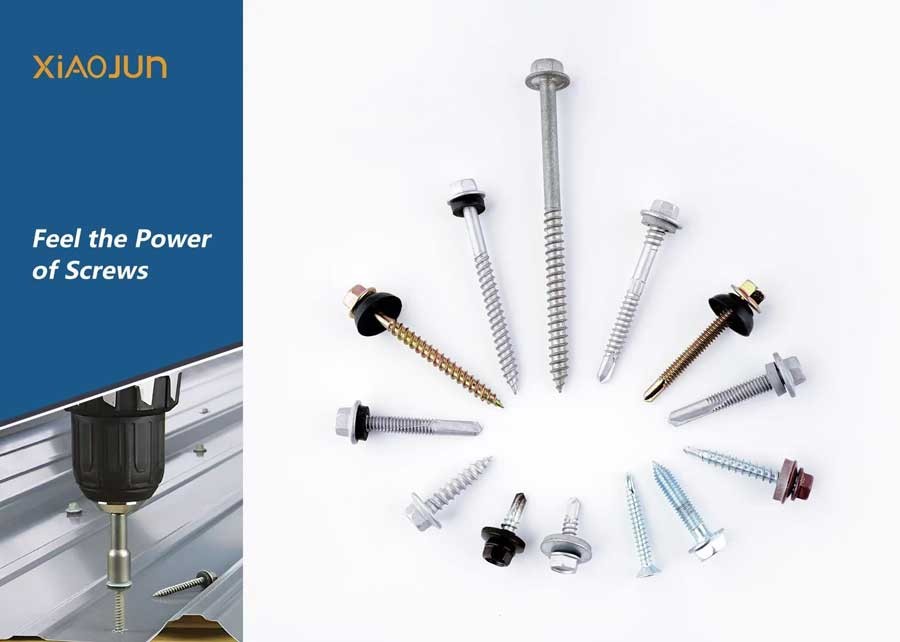
A cut-tail screw has a milled slot or notch at the tail that forms a cutting edge. As the screw enters, this edge cuts rather than compresses the material, reducing driving torque and helping chips clear. It is often chosen for plastics, thin-wall sections, and materials prone to cracking or stress whitening. The cut-tail design improves thread engagement and lowers the risk of splitting, but it is not a substitute for a structural drill point in thick steel.
The key point: a screw can be both external hex and cut-tail. Hex describes how you drive it; cut-tail describes how it enters. Specify the head for access and torque, and the point for material and thickness. As a drill point and self-tapping screw factory, we help customers match both features—so the screw performs in the application, not just on the drawing.
© 2026 Handan Xiaojun Fastener Manufacturing Co.,Ltd


 2026-11-16
 Xiaojun Catalogue 2025


